
I can already picture you walking into a music store filled with instruments and gear. You’ve decided to buy a new set of guitar strings. Those strings you haven’t changed in a year? Yeah, they’ve got to go. This time, they need to be perfect — exactly what suits you. You slowly make your way toward the string section, partly because you’re still unsure which ones to pick and partly because you’re distracted by all the instruments around you. Finally, you reach the right aisle, but the salesperson is swamped and doesn’t have time to hear what you need. After a few minutes, you grab a familiar pack of strings and leave. But deep down, you know it’s not quite right.
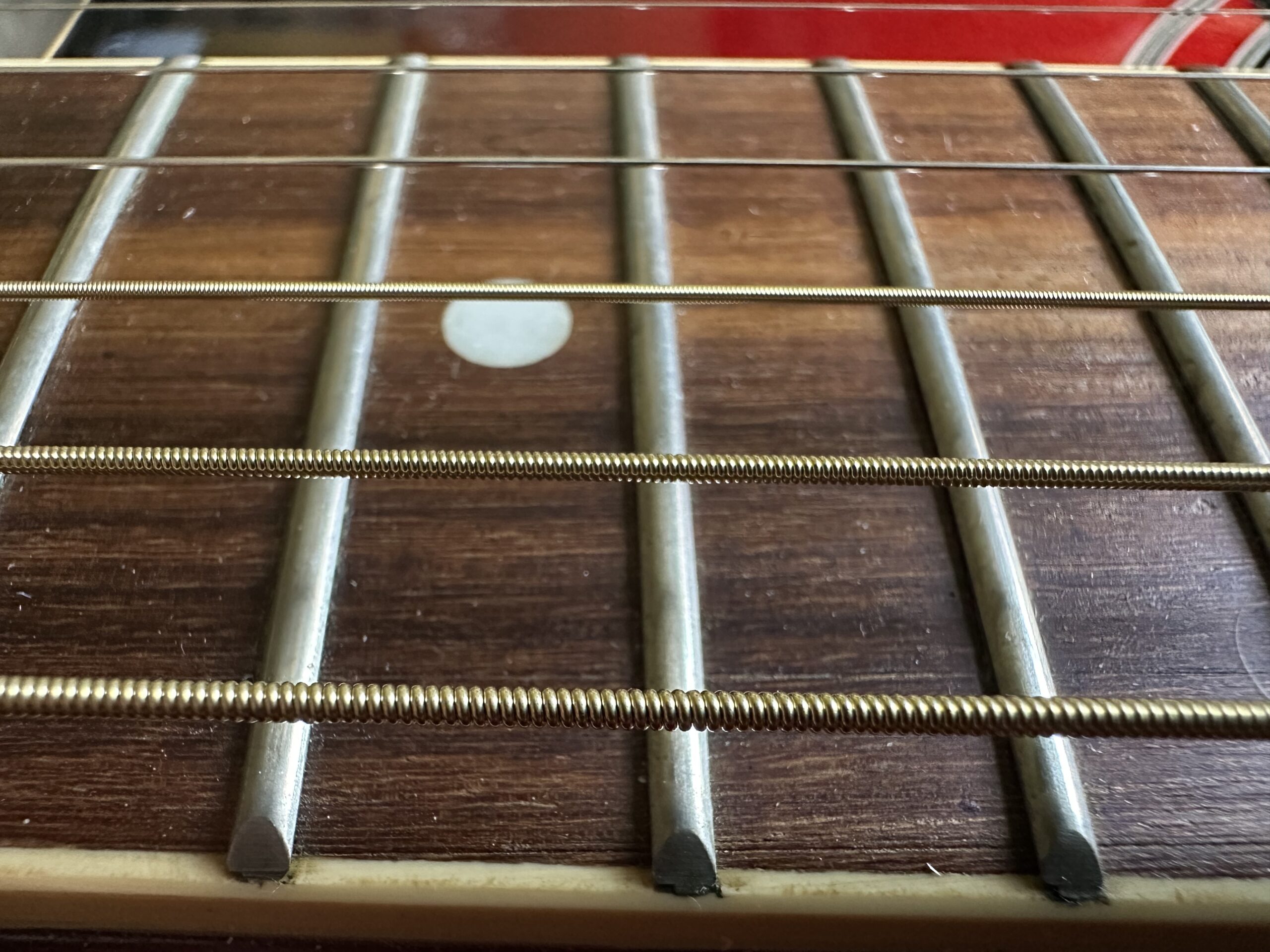
Ugh, I’ve been there more times than I’d like to admit. So, you turn to internet searches, just like I did. Which strings are ideal for me? What gauge? What kind of winding? If you’re looking for answers to these questions, this text might not give you a definitive solution, but it will definitely narrow down your choices and teach you something new.
Ultimately, the only way to truly know which strings work best for you is by playing with different ones. What you’ll learn here are some fascinating details about strings, their evolution through history, shapes, windings and the materials used to make them. By the end, you might just decide to try a completely different type of string.
Stringed instruments have a long history, predating the guitar itself. The earliest such instruments existed in Ancient Egypt. The guitar, as we know it, came much later, evolving from the lute and the Spanish vihuela. Modeled after the lute, early guitars had four pairs of strings—eight in total. From antiquity up until the 20th century, strings were made from animal intestines, commonly known as catgut. Despite the name, there’s no evidence that cat intestines were ever used—most likely, it was sheep or cattle intestines. Some sources mention silk, horsehair, or even human hair, but animal intestines were the mainstay.
Imagine a conversation between a salesperson and a customer if those strings were still in use today:
– “Good afternoon. Do you have strings made from large intestines?”
– “Yes, how much do you need?”
– “About three meters.”
– “Here you go.”
– “By the way, do you have any made from lung tissue? I read something about it online.”
– “Sorry, that’s just a myth. You’re not the first to ask.”
– “Got it. Thanks anyway.”
Sounds like the start of a horror story, doesn’t it?
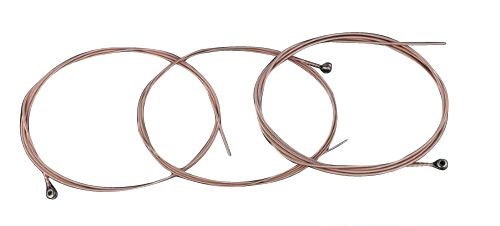
Of course, strings made from such materials were far less reliable than modern ones. Temperature changes wreaked havoc on them, causing constant detuning. That said, they were soft to the touch and easy to play. I also mentioned materials like silk and horsehair, which were sometimes used to wrap around a core of animal intestines. So, in essence, they weren’t purely silk strings.
As time went on, musicians sought louder and more reliable strings. In the 17th century, luthiers achieved this by wrapping metal wire around an animal intestine core. This created thicker, more durable, louder, and more stable strings, eliminating the need for doubled strings.
By the mid-19th century, steel strings emerged. Though they’re now ubiquitous, they didn’t have the smoothest start. Their high tension could warp guitar necks or even the body itself. It wasn’t until the early 20th century that steel strings were refined to an appropriate gauge. These held their tuning much longer and were easier to amplify.
The mid-20th century was a pivotal period for guitar string innovation, bringing us the strings we know today: bronze, nickel, steel, nylon, and all their variations. These are the ones you’re agonizing over when you walk into a music store.
Since this text would get way too long if we dove into every string brand and type, we’ll stick to the basics for now. Perhaps I’ll dedicate a future post to specific string brands. For now, let’s move on.
After covering the basic evolution of guitar strings, let’s dive into what sets some strings apart from others. Starting from the ground up: the core.
If you haven’t noticed (and you might not have), a guitar string consists of a core—the central part—and a wound wire wrapped around it. We’ll get to why this matters soon. The core can come in two shapes, or cross-sections: round and hexagonal.
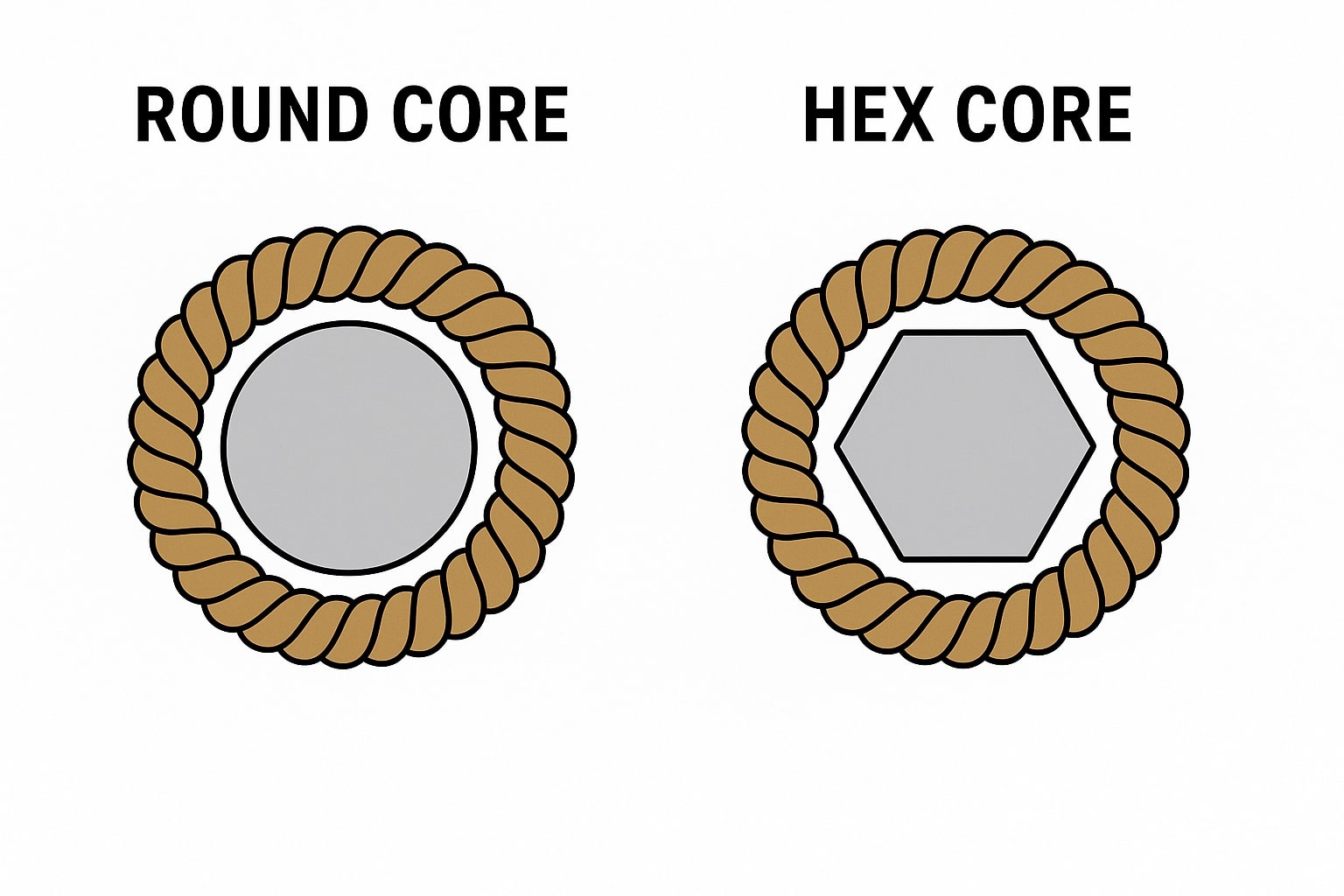
Round core strings are old-school, vintage, and have been used for centuries. Their advantages? They’re easier to bend, feel smoother, are more flexible, and have less tension. The downside? If you’re not careful during installation, they can detune more easily. Regardless, they produce a warm, pleasant tone with more sustain.
Hexagonal core strings, on the other hand, are a relatively modern invention (compared to the centuries-long history of stringed instruments). Most strings today use this core because it’s easier to manufacture. The hexagonal shape also prevents detuning and creates a tighter bond with the wound wire, making the string feel stiffer. These strings produce a brighter, more open tone. Plus, they’re easier to install on the instrument, as the core anchors more securely to the tuning peg.
Now we’re getting to the part where the string’s construction affects how it feels under your fingers. You’ve probably noticed that the three thicker strings (E, A, and D) on your guitar have a core wire with a thinner wire wound tightly around it. Here, I’ll explain the different winding methods and how they impact sound and playability.
There are three main winding methods:
– Roundwound
– Flatwound
– Half-roundwound
This is the foundation of guitar string construction, and there’s a good chance these are the strings on your guitar right now—or at least you’ve played them before. What’s the deal?
As I mentioned, a layer of wire is wound around the core. In this case, that wire has a round cross-section, tightly wound and packed around the core. These strings produce a bright, sharp tone with a focus on higher frequencies. They’re the most common type, used by the vast majority of musicians.
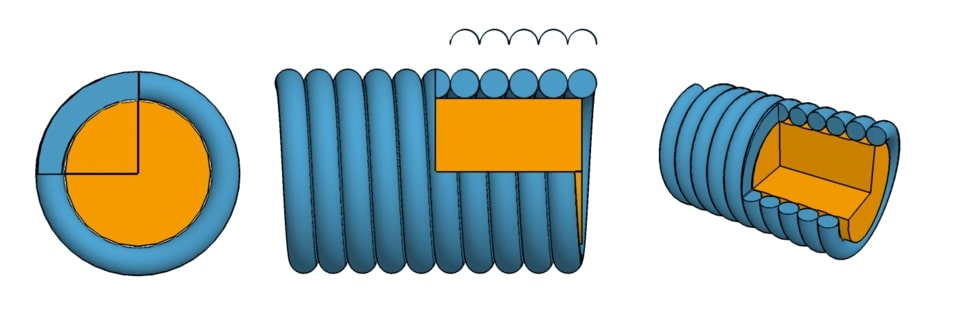
Their brightness is a big plus, especially if you’re playing with more gain. The downside? They’re less durable and consistent in tone. Due to their round winding, these strings have microscopic grooves and ridges that can cause noise or squeaking as your fingers slide across them. If that’s not your style, you’ll need to be mindful. These grooves also trap sweat, oils, dead skin, and dust, causing the strings to gradually lose their initial sound, meaning you’ll need to replace them sooner.
This winding method is old-school but feels almost unfamiliar, like a forgotten art. Instead of a round wire, a flat metal ribbon is wound around the core. What does this do?
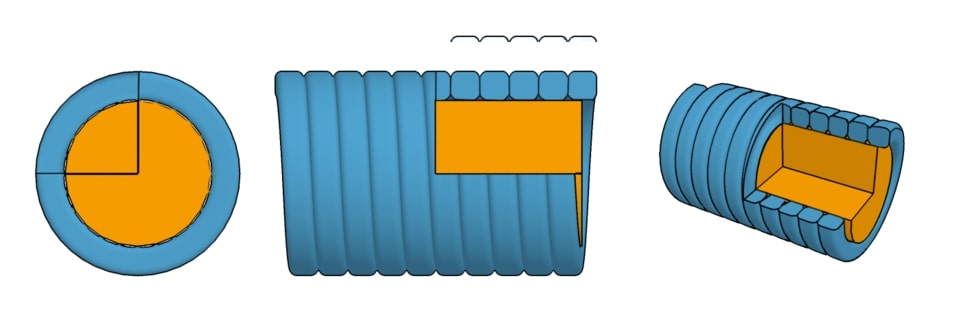
Flatwound strings have a darker, more melancholic sound. If you want your guitar to sound richer with deeper chords, these are the way to go. They make transitioning between chords or riffs smoother and sliding easier. Why? Because their flat surface lacks the grooves and ridges of roundwound strings, so sweat and dirt have nowhere to collect, making them last longer.
The downside? Bending is tougher due to the thicker core, and the desired bending effect is harder to achieve. With practice, though, this can be overcome. Some say flatwound strings sound “muddy” with high gain, but that’s subjective—some players might love it. Also, unlike most strings, the G string is wound in addition to the E, A, and D, so it may take some getting used to, especially for lead guitarists who rely heavily on the G string for melodies and harmonies.
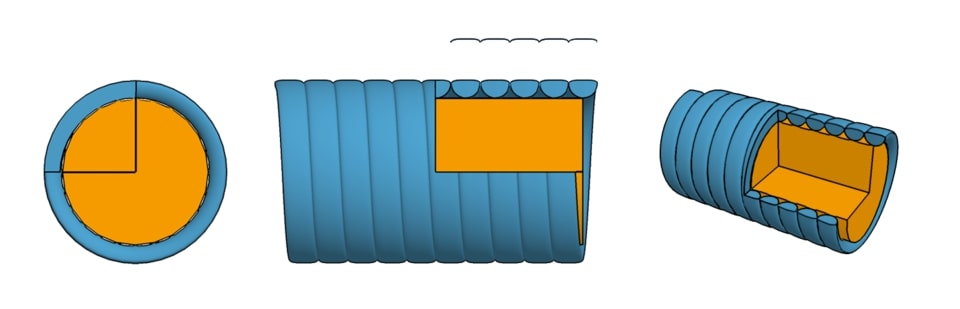
As the name suggests, these strings are a hybrid of roundwound and flatwound. They combine the brightness of roundwound strings with the depth of flatwound ones. They bend like roundwound strings but slide as smoothly as flatwound ones. Their lifespan is also longer than roundwound strings for the same reason as flatwound: the surface is smoother, leaving fewer places for dirt and sweat to accumulate.
This is achieved through fine grinding. These strings start with a roundwound core and winding, then undergo a process of grinding and smoothing to achieve the desired shape, altering the sound and extending their lifespan.
So far, we’ve covered string construction, core types, and winding methods, along with a bit of history. Now, let’s talk about the materials used in modern strings. These materials, combined in various ways, produce different sounds and types of strings for different guitars. Let’s dive in.
The primary material for the core of strings used in acoustic and electric guitars is steel—specifically, high-carbon steel. This is used for both plain strings (typically the high E, B, and G) and as the core for thicker strings (D, A, and low E). Steel cores provide the necessary tension to produce tone and maintain tuning.
There’s also a silk-and-steel variant, which uses a smaller amount of steel combined with silk. This gives the strings a warmer tone and lower tension, making them gentler on the fingers.
Nylon strings became widely used after World War II, offering a far superior alternative to animal intestine strings. They’re used for classical and nylon-string guitars. The high E, B, and G strings are single nylon strands, while the bass strings (D, A, and low E) use a nylon core wrapped with a silver or bronze alloy to produce a deeper, warmer tone.
You’ve almost certainly played a guitar with these strings. They’re the most popular alloy for electric guitar strings, available in various gauges and shapes. They produce a crisp, smooth tone and are a safe, reliable choice.
Strings wound with pure nickel produce a warmer, softer tone with less pronounced attack. They’re ideal for guitars with naturally bright or snappy tones, as they balance things out perfectly.
These strings last longer, as the material resists corrosion. They produce a bright, bell-like tone, the opposite of pure nickel. They’re great for players with sweaty hands and are highly durable. However, their hardness can wear down frets faster, especially with hexagonal cores.
These strings are reserved for acoustic guitars, named for their composition of 80% copper and 20% zinc. They’re among the most popular for acoustics, delivering a warm, smooth tone. Variations like 85/15 bronze also exist, named for their alloy ratios.
These strings last longer and hold their tone better than 80/20 bronze. Made with a small percentage of copper and phosphorus, they produce a softer, more sustained tone.
Developed out of necessity during World War II, nylon strings are used for classical guitars. They’re far more durable than animal gut strings and produce a warm, gentle tone. The three thinner strings are pure nylon, while the three thicker ones are typically wound with silver around a plastic core.
All the materials mentioned here are just the foundation of guitar strings. There are countless variations of these and other materials in different proportions. Depending on the tone you’re after and the durability you need, you’ll have to experiment, explore, and test to find the strings that suit you best.