Does Tonewood Mean Anything on an Electric Guitar
Honored guests, welcome to the clash of clashes. A battle of titans that will change your understanding of the world as we know it. An event of tectonic proportions. The answer to the question that has haunted us since Keith Richards walked with dinosaurs. After reading this, you might see the world—and the people around you—in a completely different light. Looking in the mirror the next day might feel impossible. Your entire value system could come crashing down. But enough teasing… In the red corner, everyone who believes tonewood affects the sound of an electric guitar. In the blue corner, those who say strings, electronics, and pickups are what truly matter. Are you ready?
Round One – How It All Began
No one really knows how it started, but I like to imagine it as a showdown between two old rivals: Gibson and Fender. Picture it like a bar fight between two drunk buddies. One swears by one thing, the other by something else—both absolutely convinced they’re right. In reality, neither probably is.
Scene: A Wild West saloon Gibson strides in, eyes locked on Fender at the bar. The music stops. Cards freeze mid-air. A dancer’s dress flutters to a halt. The bartender keeps pouring. Only the cigarette smoke drifts freely. Gibson stomps up, orders a neat whiskey, and stares down Fender—who’s always preferred British homemade gin. Fender turns, meets his gaze. For a moment, the world stands still. The pendulum on the old clock stops ticking.
Gibson breaks the silence: “So, you’re the one using maple and claiming it’s better than mahogany?” Fender, already tipsy and blunt: “Damn right. Mahogany’s heavy and overrated.” A coin flips, hits the floor with a ping, and life resumes…
That’s how it began. Kidding, of course. Just like our main question doesn’t quite make sense, neither does my story. I’ll explain why later.
Round Two – The Debate Escalates
After the fictional Wild West hangover wore off, things got serious. The argument spread like wildfire. People started “proving” their claims. They became so convinced that electric guitar tone depends on wood choice that they began using trees of specific ages, dryness, or moisture levels—even growing timber under supervision for guitar-making.
New companies emerged. More woods entered the game. Each brand brought a “new sound.” You’d hear things like: “Hey, I’ve got a mahogany guitar—best wood for tone, you know.” Or: “Maple necks are the cleanest. Gives that crisp snap.”
Everyone had an opinion. As many woods, as many views. No wonder—wood is the dominant factor in acoustic guitar tone. By that logic, people assumed: “Heavier wood = better guitar.” But something doesn’t add up. We’re not talking about acoustics.
Round Three – The Idea Right Under Our Noses
As more guitars were built, a new question emerged: Why do two guitars made from the same wood by different builders sound completely different?
Some say it’s the finish, neck joint, or preparation. But is that really it? What if we keep the pickups and strings identical and only change the wood? Shouldn’t the tone change? It has to, right? After all, tone “depends” on wood.
Well… not quite.
Tests began. Doubts took root. Experiments followed. What came next left believers speechless. Everything they’d held sacred for decades? Gone.
Round Four – The Knockout
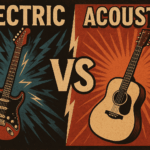
So what happened? Simple: acoustic guitars and electric guitars are fundamentally different beasts.With acoustics, tone depends heavily on wood choice and body thickness—back, sides, top. Wood quality and construction shape the sound.
But the name says it all: ELECTRIC guitar. The tone comes almost entirely from the electronics: pickups, wiring, pots, output jack, pedals, and amp.
So what is wood for in electric guitars?
It matters—don’t get me wrong. But mostly for aesthetics and vibration feedback to the player.
Let’s break it down:
Aesthetics
How many times have you fallen for a guitar just because it looks amazing? Or recognized a brand instantly by its shape? Some brands copy each other so closely that visual differences are minimal. But looks don’t affect plugged-in tone.
Vibration & Feel
Here’s where it gets interesting. I believe wood affects how the guitar feels in your hands and against your body. The strings vibrate. Pickups capture that. But the body wood also resonates and transmits vibration to you. Different woods have different densities, grain structures, and conductivity. Maple feels snappy and bright in hand. Mahogany feels warm and resonant. These vibrations travel through the instrument into your body—especially when it’s strapped on or resting in your lap.
Does that change the electrical signal going to the amp? No. But does it change how you play and experience the instrument? Absolutely.
So maybe I’m not entirely wrong to say: it depends on what feels right to you.
New Evidence
Lately, YouTube guitarists and bloggers have been running real experiments. The debate’s ancient, but the internet changed everything. Now we have side-by-side tests:
- Same body shape
- Same electronics (pickups, wiring, pots)
- Same strings, tuning, scale length
- Same amp and settings
- Only the wood changes
Results? Consistent across tests: Wood has no measurable impact on the amplified tone.
The only things that change the sound:
- Pickups (active/passive, Seymour Duncan vs. EMG)
- Amp (Orange vs. Marshall)
- Pedals (overdrive vs. distortion)
Opinions without blind tests? Worthless. Waveforms, spectrograms, and blind listening confirm it.
Wood and body shape do affect:
- Playing comfort
- Attack response
- How aggressively you dig in
- Whether downpicking feels smooth or clunky
A thin neck vs. thick? Rounded body vs. sharp edges? Those influence technique and feel. And because feel affects how you play, people think it changes tone. But plug in, blind test, analyze the signal—same output.
So What Now?
Relax. We’ve all been wrong before. No one died. Just don’t double down when evidence says otherwise.
You might think: “This whole tonewood hype was just marketing lies!” Yes and no.
Back then, people genuinely believed electrics worked like acoustics. They weren’t lying—they were mistaken. And yes, branding leans hard into mythology. But without iconic shapes and woods, we wouldn’t recognize a Telecaster from an SG. The feel of holding a Les Paul vs. a Strat? Night and day. That’s what companies sell: identity, history, and tactile experience.
Look at an SG—don’t you immediately hear Black Sabbath in your head? That’s perception. Powerful. Real. But not electrical truth.
Conclusion
I took some creative liberties, but the core remains: Electric guitar tone comes from electronics—not wood.
Anyone claiming otherwise? Ask for blind tests. Good luck finding them.
Premium brands aren’t expensive just because of “magic mahogany.” They use better hardware, tighter tolerances, and decades of legacy—endorsed by legends. That combo justifies the price.
Watch the test videos (I’ll link a few below). Dig deeper. You’ll reach the same conclusion every time:
- Acoustic tone → wood + construction
- Electric tone → pickups + amp + effects
And that’s it.